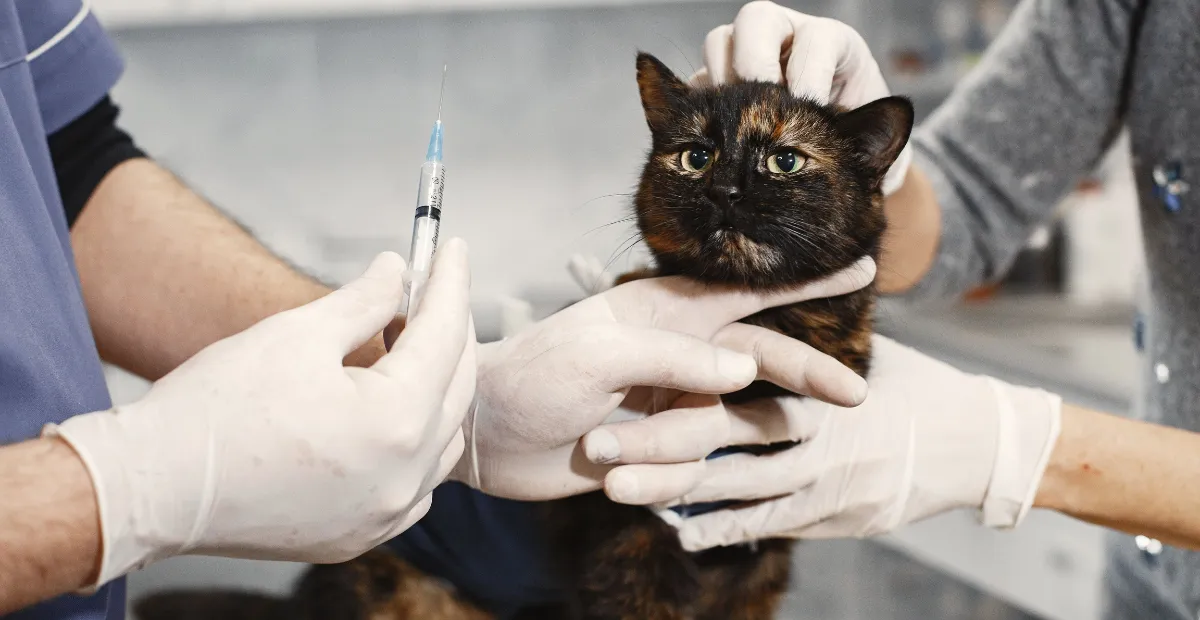
Cat boarding vaccine requirements in Ogden come down to two shots, rabies and FVRCPP, and the rabies shot is required by law even if your cat never goes outside. If either one is missing or expired, your cat can’t check in until it’s sorted out.
Here’s what each vaccine protects against, what Ogden’s ordinance says about indoor cats, and how far ahead to call your vet before a holiday trip.
Which Vaccines Are Required for Cat Boarding in Ogden?
Idlewire requires two vaccines for every cat staying in our cat-only boarding in Ogden: rabies and FVRCPP. A written medical exemption or a veterinarian-provided titer test is accepted in place of a vaccine your cat can’t safely receive.
- Rabies: required by law for cats in Ogden and across Utah
- FVRCPP: a combination vaccine against some of the most contagious diseases cats can catch
Rabies Vaccine
Rabies is the only cat vaccine required by law in Ogden, and it’s the one that matters most if your cat ever has contact with wildlife.
Rabies isn’t a distant risk here. In July 2026, a bat tested positive in Weber County, the first rabid bat reported in the county that year and the fourth in Utah, according to the Weber-Morgan Health Department.
Bats are the main concern because they can find their way indoors. Nationally, contact with infected bats is the leading cause of human rabies deaths, according to the CDC.
FVRCPP Vaccine
FVRCPP is a combination shot whose main job is protecting cats against feline viral rhinotracheitis (herpesvirus), calicivirus, and panleukopenia. All three are core vaccines for every pet cat under the AAHA/AAFP feline vaccination guidelines.
Herpesvirus and calicivirus are two common causes of feline respiratory infections, the sneezing, watery eyes, and congestion people often call a cat cold. They matter for boarding because stress can bring them back.
According to the Cornell Feline Health Center’s guide to respiratory infections, herpesvirus becomes a lifelong infection in up to 80% of exposed cats, and up to 45% periodically shed the virus, usually when stressed. The vaccine doesn’t prevent every infection, but it significantly reduces how sick a cat gets and how much virus it sheds.
Panleukopenia is especially dangerous for young cats. Cornell notes that sudden death from panleukopenia is most often seen in kittens under five months old.
Is Rabies Vaccination Legally Required for Cats in Ogden?
Yes. Ogden City requires every cat four months or older to be vaccinated against rabies within 30 days of reaching that age, and the rule makes no exception for indoor cats.
Under Ogden City Code § 13-2-5, a cat adopted or moved into the city past that age must be vaccinated within 10 days. Revaccination follows the schedule of the specific vaccine your vet uses.
The same ordinance requires the rabies tag to be attached to your cat’s collar or harness. A cat without a current tag is treated as unvaccinated.
Licensing ties into this. Ogden City Code § 13-2-2 requires cats six months and older to be licensed, and the city won’t issue a license without written proof of rabies vaccination.
The requirement isn’t unique to Ogden. The Weber-Morgan Health Department points out that Utah law requires both cats and dogs to be vaccinated for rabies.
Where you license depends on where you live. Ogden residents register through the city, South Ogden, Riverdale, and Pleasant View run their own licensing, and Weber County Animal Services lists which other cities handle their own programs.

Do Indoor Cats Really Need Vaccines for Boarding?
Yes. Indoor cats need both rabies and FVRCPP to board, and rabies is legally required no matter how your cat lives.
Staying inside lowers the risk, but it doesn’t remove it:
- Bats can get into homes, which is why local health officials ask residents to report any bat found in a sleeping area.
- Panleukopenia can survive indoors for upwards of a year and spreads on bedding, bowls, toys, hands, and clothing.
- A boarding stay puts your cat in a building with other cats, even when each cat has its own private condo.
What If My Cat Can’t Be Vaccinated?
Idlewire accepts a written medical exemption or a veterinarian-provided titer test in place of a vaccine your cat can’t safely receive.
A titer test is a blood test that measures your cat’s existing antibody levels, checking for immunity without another injection. Ask your vet whether an exemption or titer makes sense for your cat, and bring the paperwork to check-in.
Keep in mind that this covers boarding. City licensing has its own rules, so check with your city’s animal services if your cat has a rabies exemption.
Do Vets Recommend Any Other Vaccines, Like FeLV?
Your vet may recommend the feline leukemia virus (FeLV) vaccine, especially for kittens. It isn’t required for boarding at Idlewire.
The AAHA/AAFP core vaccine recommendations for pet cats treat FeLV as core for cats under one year old, given as two doses three to four weeks apart starting as early as eight weeks.
For low-risk adult cats with no exposure to cats of unknown FeLV status, it becomes noncore. The guidelines also recommend testing a cat’s FeLV status before vaccinating.
When Should Kittens Be Vaccinated Before Boarding?
Kittens start their core combination series no earlier than six weeks old, with boosters every three to four weeks until 16 to 20 weeks. In Ogden, the rabies shot is due within 30 days of a kitten turning four months old.
The AAHA/AAFP schedule also recommends considering a booster at six months rather than waiting until one year, then revaccinating every three years.
Plan your kitten’s first boarding stay after that series is finished and the rabies certificate is on file. Call ahead to confirm age requirements before you book.
How Far Ahead Should You Vaccinate Before a Holiday Stay?
Check your cat’s records at least four to six weeks before you travel. A first-time rabies shot needs about a month to take full effect, so a last-minute appointment leaves no margin.
The CDC states an animal is considered immunized 28 days after its initial rabies vaccination. With Thanksgiving on November 26, 2026, a cat that needs its first rabies shot should see the vet by late October.
A simple prep checklist:
- Pull your cat’s vaccine records and check both expiration dates.
- Book any overdue or first-time shots right away.
- Reserve your cat’s stay and review cat boarding rates, including holiday pricing.
- Bring the records to check-in, where our team reviews requirements with you
Cat Vaccine Requirements at a Glance
| Vaccine | Who Needs It | Legally Required in Ogden? | Required for Boarding at Idlewire? |
|---|---|---|---|
| Rabies | All cats 4+ months, indoor or outdoor | Yes | Yes |
| FVRCPP | All cats, with a kitten series first | No | Yes |
| FeLV | Cats under 1 year, adults at risk | No | No (vet-recommended) |
FAQ: Cat Boarding Vaccine Requirements in Ogden
Can my cat board if a vaccine has expired?
Not until it’s updated, unless your veterinarian provides a written medical exemption or titer test. Idlewire requires rabies and FVRCPP to be current for every boarding cat. If you’re unsure about your cat’s records, call (801) 479-3000 before your stay and the team can answer questions in advance.
Does my indoor cat have to wear a rabies tag in Ogden?
Yes. Ogden City Code requires the rabies tag to be attached to your cat’s collar or harness, and a cat without a current tag is treated as unvaccinated. The city also requires licensed cats to wear their license tag at all times.
How often does my cat need a rabies booster?
The first booster is due 12 months after the initial rabies shot, according to the AVMA model rabies control guidance. After that, timing depends on the specific vaccine your vet uses, which is also how Ogden City Code sets revaccination. Your cat’s rabies certificate lists the date the next shot is due.
What should I bring for my cat’s boarding stay besides vaccine records?
Bring any medications with written instructions, plus a favorite blanket or toy if you like, since familiar items help cats feel more comfortable. Bringing your cat’s regular food is optional, because in-house food is available during the stay.
Do cats need the same vaccines for grooming?
Yes. Cats need current rabies and FVRCPP vaccines for cat grooming appointments too, with the same medical exemption and titer options. One up-to-date set of records covers both services.
I’m boarding my dog and cat at the same time. Do they need the same vaccines?
No. Cats need rabies and FVRCPP, while dogs need rabies, Bordetella, and DHPP. Our guide to dog boarding vaccine requirements in Ogden covers the dog side, and cats stay in a dedicated area completely separate from dogs.
Book Your Cat’s Stay or Stop By for a Tour
👉 Once your cat’s vaccines are current, book your cat’s stay online or call (801) 479-3000. You’re welcome to tour the cat area anytime during open hours, Monday through Friday 7 a.m. to 7 p.m. and weekends 8 a.m. to 6 p.m., no appointment needed.
We’re at 5583 Harrison Blvd in South Ogden. If this is your cat’s first stay, read our tips on how to make your cat’s boarding stay more comfortable.
References
- Ogden City Code § 13-2-5, Rabies Control
- Ogden City Code § 13-2-2, Licensing Provisions
- Weber County Animal Services, Animal Licensing
- Weber-Morgan Health Department, “Avoid Touching Bats, Update Pet Vaccinations to Prevent Rabies” (2026)
- American Veterinary Medical Association, Model Rabies Control Document
- Centers for Disease Control and Prevention, About Rabies
- Centers for Disease Control and Prevention, Rabies Information for Veterinarians
- American Animal Hospital Association, 2020 AAHA/AAFP Feline Vaccination Guidelines
- American Animal Hospital Association, Core Vaccines for Pet Cats
- Cornell Feline Health Center, Feline Panleukopenia Virus
- Cornell Feline Health Center, Respiratory Infections